Understanding Homes, Value and Strategy in the East Bay
EAST BAY RESIDENCE
510-575-0629 | moya.robinson@compass.com
East Bay Real Estate | Strategic Representation
If you live in the Oakland Hills, Piedmont, Berkeley Hills, Montclair, or Orinda, chances are your yard isn’t flat, it’s a slope, a series of slopes, or a combination of terraces shaped by decades of movement and weather.
Hillside living is part of the East Bay’s charm: sweeping views, tree canopies, dramatic elevations, and architecture that feels tucked into nature.
But hillside gardens are a different world.
They drain differently. They erode differently. They heat differently.
And when they’re designed intentionally, they become some of the most beautiful, low-maintenance landscapes in the region.
This guide breaks down what actually works here — and how to shape a hillside garden that thrives for years.
Why Hillside Yards Get Ignored (and Why They Shouldn’t)
Most East Bay homeowners assume their slope is “just too complicated.”
But the truth is, hillside yards can be:
- easier to maintain than flat yards
- more private
- better for drought-tolerant design
- stunning focal points for photography when selling
It all comes down to three essentials: terracing, drainage, and plant selection.
1. Terracing: The Foundation of Every Great Hillside Garden
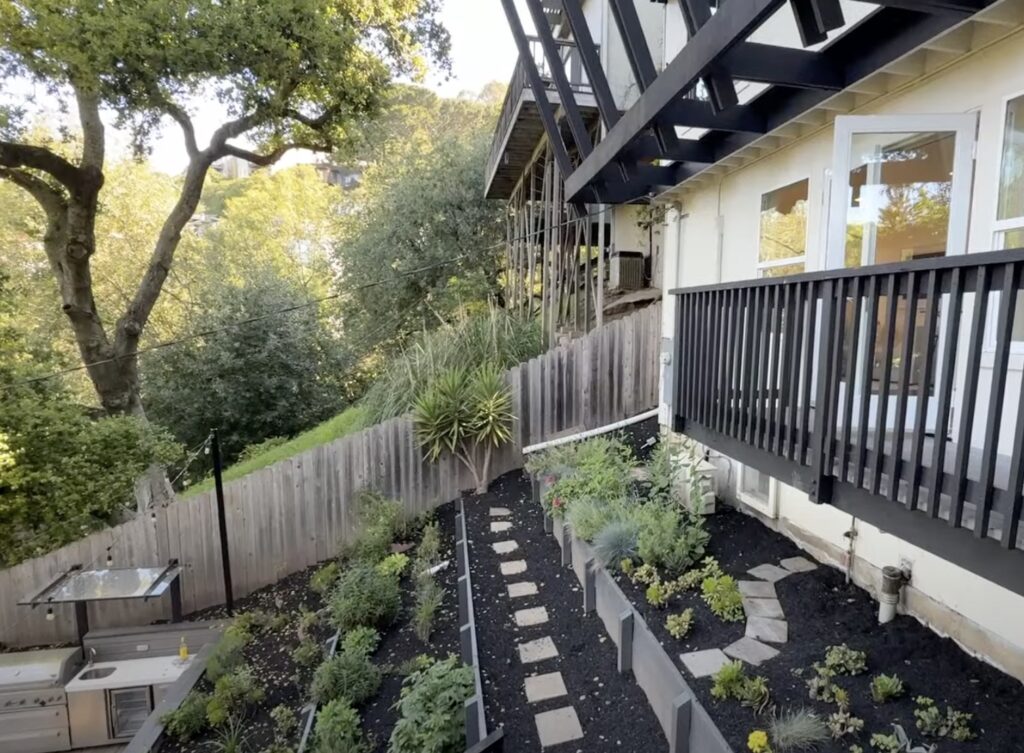
Terracing is the most impactful improvement a homeowner can make on a slope.
Whether it’s one platform or several, terracing does three things:
A. Creates usable outdoor living space
In Montclair, Upper Rockridge, and Glen Highlands, many lots have narrow or angled yards.
A simple terrace can give you:
- a dining area
- a small lawn
- a play area
- an entertaining deck
- a vegetable garden
Even one flat pad can change how you use the home.
B. Controls erosion (your biggest long-term risk)
Clay-heavy East Bay soil doesn’t absorb water quickly.
When rain hits a slope, it rushes downhill, taking nutrients, and sometimes plant roots, with it.
Terracing slows that flow naturally.
C. Helps plants root correctly
Plants on steep angles tend to tilt, slant, or struggle to stabilize.
Terraces give them an even foundation to grow strong, deep root systems.
When terracing is worth the investment:
- Your slope is too steep to walk
- Water pools at the base of the hill
- You want functional outdoor living space
- Plants keep dying in the same area
- You plan to sell in the next 3–5 years
Homes with intelligently terraced yards often show and photograph dramatically better.
2. Drainage: What Homeowners Miss Until It’s Too Late
Drainage is the quiet, make-or-break factor in every hillside yard.
Most East Bay hillsides have:
- clay soil
- fast downhill water movement
- seasonal storm “channels” that homeowners don’t see
- runoff that collects against the home
Signs your hillside drainage isn’t functioning:
- pooling water at the bottom of slopes
- muddy or bare patches
- “sliding soil” after storms
- moss growing where it shouldn’t
- soggy mulch that never dries
- leaning fences or retaining walls
The drainage systems that actually work here:
• French drains
The most common fix, especially in Montclair and Piedmont.
They redirect groundwater before it becomes a problem.
• Swales
Shallow channels lined with rock or plants that slow water and guide it gently.
Beautiful and functional — especially in Orinda and Moraga.
• Dead-level berms and grading
Small adjustments to slope angles that dramatically change water behavior.
• Subsurface drains
Useful for heavy runoff zones or older properties with clay pipes.
Why drainage matters for resale
Good drainage:
- protects the foundation
- preserves landscaping
- prevents erosion
- reduces long-term maintenance
- signals that the property is well cared for
Buyers (and inspectors) notice immediately.
3. Low-Maintenance Hillside Planting: What Actually Thrives Here
Hillside gardens look best when planted with species that love the climate and stabilize the soil.
Deep-rooted natives (excellent for slopes):
- Manzanita
- Ceanothus
- Toyon
- California lilac
- Coffeeberry
These plants anchor the hill, require little water, and look lush year-round.
Mediterranean favorites (thriving in sunny East Bay slopes):
- Lavender
- Rosemary
- Sage
- Hardy succulents
- Olive trees
Perfect for Orinda, Lafayette, and Moraga’s sunny, dry exposures.
Shade-tolerant shrubs (for cooler or fog-prone hillsides):
- Azaleas
- Hydrangeas
- Camellias
- Ferns
- Japanese maples
Ideal for Montclair, Upper Rockridge, and parts of the Berkeley Hills.
Fire-wise hillside plantings
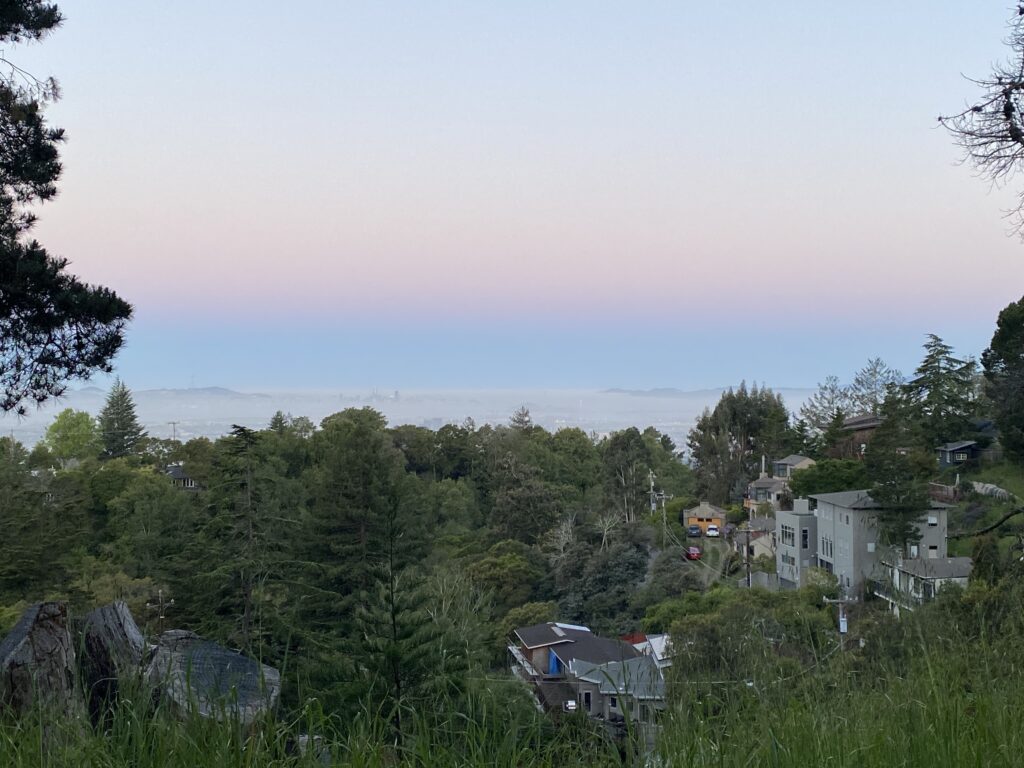
A growing concern in the Oakland and Berkeley Hills.
Choose lower-resin, slower-burning plants and keep spacing generous.
4. Retaining Walls: When They’re Worth It
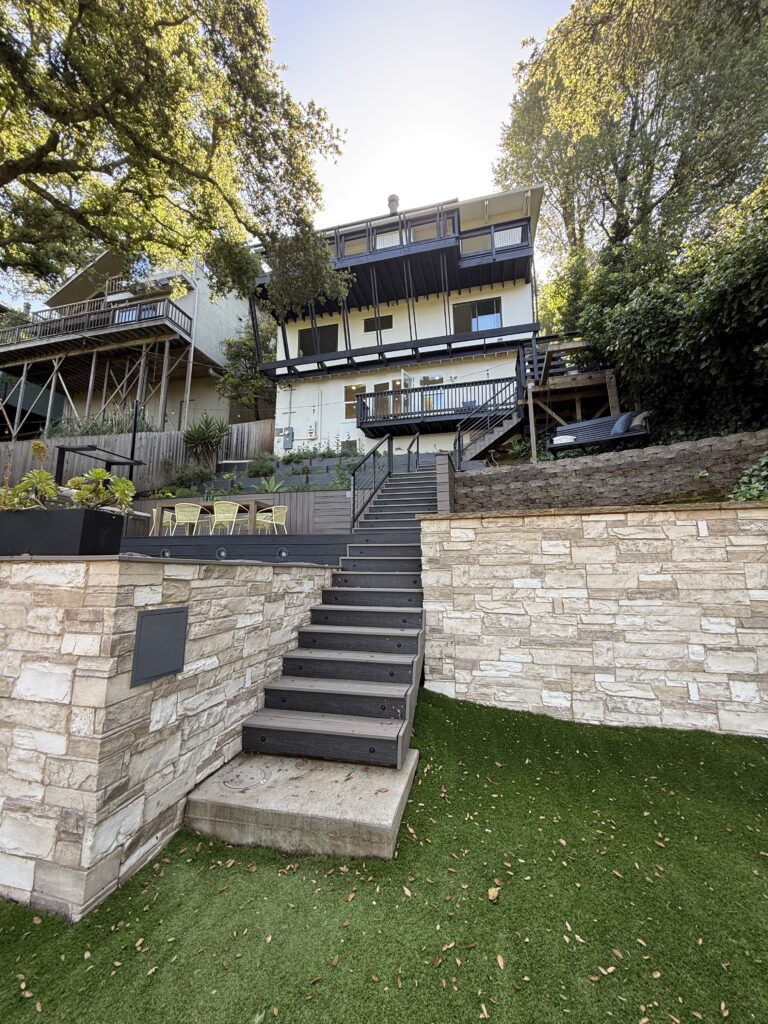
Retaining walls aren’t always necessary — but when they are, they’re game-changers.
When to consider a retaining wall:
- your slope drops abruptly
- you want multiple terraces
- drainage issues persist
- you’re building usable living space
- inspections have flagged movement
Types that work best here:
- Concrete: strongest, lowest maintenance
- Engineered stone: beautiful, stable
- Pressure-treated timber: budget-friendly but needs replacement over time
As a real estate agent, I see retaining walls dramatically improve both safety and home value when done correctly.
5. Outdoor Living on a Hillside: Turning a Slope Into a Destination
Some of the most beautiful East Bay yards are carved into hillsides.
Think:
- elevated view decks
- small flat pads for dining
- stairways cut through lavender or succulents
- hillside lighting that glows at night
- garden paths leading to reading nooks
These design moments photograph beautifully and help buyers emotionally connect to a home.
The goal isn’t to flatten everything, it’s to shape the slope so it enhances the architecture and the experience of living there.
Final Thoughts
Hillside gardens require strategy, but when done right, they transform East Bay homes into something truly special.
Understanding your slope, soil, drainage, and terraces makes your yard easier to maintain, more beautiful, and more valuable over time.
The hillside is not a limitation it’s your canvas.
Thinking about improving your hillside yard?
I can help you design a plan that fits your microclimate and makes your outdoor space feel functional and beautiful year-round.
Reach out anytime for trusted East Bay landscaper and design recommendations.

